Dark Side Of People Pleasing
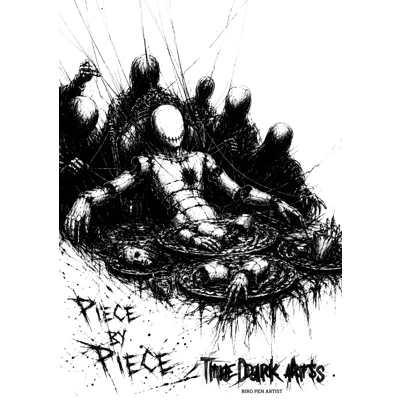
This drawing is about the slow erosion of self in the act of people pleasing.
The main figure in this scene isn't being hurt or destroyed in a violent way, it's actually taking part in what's happening. It's sitting down, being calm and cooperative, almost like it's in a ceremony. Its body looks like it's made of delicate materials, like porcelain or wax, which are often used to create things that are meant to be looked at and handled carefully, but can also be broken easily without any serious consequences. The smile on its face isn't a real expression of happiness, but rather a fixed and permanent sign of agreement - a kind of contract that it can't back out of now.
Every piece that's laid out on the table is a trade-off - it's about giving up time, a part of who you are, your limits, and your say. It's not like something is suddenly ripped away in a moment of madness. No, it's more like it's handed over, bit by bit, until there's barely anything left to offer.
The surrounding figures are intentionally faceless. They are not individuals, but roles expectations, obligations, projections. Their lack of identity reflects how people pleasing rarely serves real connection; it serves shifting, undefined demands. They do not need faces because they are interchangeable.
The thin, chaotic lines pulling at the figure’s limbs resemble puppet strings, but they are fragile almost insignificant. This is deliberate. The control is not forceful. It is internalized. The figure could resist, but no longer knows how.
The words "PIECE BY PIECE" scribbled in the margin aren't just a caption, they're more like a wakeup call. It's not about what's happening to the figure, but about what the figure has let happen to itself, what it's given up, bit by bit. This is not a scene of horror inflicted.
It is a portrait of quiet surrender.